
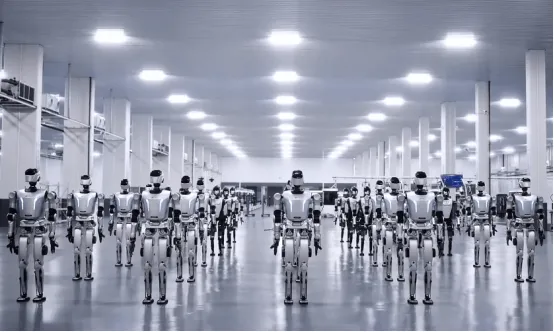
The rapid evolution of robotics technology has made humanoid robots one of the most important innovations in modern industry. From industrial automation to service applications, humanoid robots are transforming the way humans interact with machines. To meet this growing global demand, manufacturers require a highly advanced humanoid robot production line capable of delivering precision, scalability, and efficiency in every stage of humanoid robot production.
The brand HONEST provides innovative manufacturing solutions designed to support advanced robotics industries with smart automation systems, precision engineering tools, and highly efficient production line configurations.
Growing Demand for Humanoid Robot Production Line Systems
The global robotics market is expanding quickly due to advancements in artificial intelligence, machine learning, and automation technologies. As industries adopt humanoid robots for complex tasks, the need for a reliable humanoid robot production line has become more critical than ever.
Unlike conventional manufacturing systems, humanoid robot production requires extreme accuracy, as even minor defects in sensors, motors, or control systems can significantly impact performance. Therefore, modern production facilities must integrate intelligent automation and multi-stage quality control systems to ensure consistency and reliability.
A well-structured humanoid robot production line not only improves efficiency but also reduces production costs and enhances overall product quality.
Structure of a Humanoid Robot Production Line
A complete humanoid robot production line consists of multiple interconnected stages. Each stage plays a vital role in ensuring that the final robot meets strict performance and safety standards.
Component Manufacturing Stage
The production process begins with the manufacturing of mechanical and structural components. These include robot frames, joints, limbs, and housing structures. High-strength materials such as aluminum alloys, titanium, and composite materials are commonly used to ensure durability while maintaining lightweight performance.
Precision machining and CNC technology are widely used in this stage to guarantee accuracy in every component.
Electronic System Assembly
In this stage, electronic components such as circuit boards, microprocessors, sensors, and communication modules are assembled. These components act as the central nervous system of humanoid robots, enabling data processing, environmental awareness, and decision-making capabilities.
Proper alignment and secure installation are critical to ensure stable performance in humanoid robot production.
Motor and Actuator Integration
Motors and actuators are responsible for movement and motion control. They are carefully installed into robotic joints to allow smooth walking, arm movement, and finger coordination. High-precision calibration is required to ensure balance and natural motion.
Any error in this stage can lead to instability or reduced performance in the final robot.
AI and Control System Integration
Modern humanoid robots depend heavily on artificial intelligence systems. During this stage, AI software, machine learning algorithms, and control systems are integrated into the robot’s hardware.
This enables the robot to recognize objects, respond to commands, and interact with humans intelligently. AI integration is one of the most critical parts of the humanoid robot production line.
Final Assembly and System Testing
The final stage combines all components into a complete humanoid robot. Once assembled, the robot undergoes rigorous testing, including movement accuracy tests, sensor calibration, balance checks, and system performance evaluations.
Only robots that pass all quality control tests are approved for delivery.
Importance of Automation in Humanoid Robot Production
Automation plays a key role in modern humanoid robot production line systems. Since humanoid robots are highly complex, manual assembly alone cannot guarantee the required level of precision and efficiency.
Automated production systems offer several advantages:
-
Faster production speed
-
Reduced human errors
-
Improved consistency in product quality
-
Real-time monitoring and feedback systems
-
Lower operational costs in large-scale manufacturing
By integrating robotics and automation technologies, manufacturers can achieve higher productivity while maintaining strict quality standards.
Smart Factory Integration in Humanoid Robot Production
The concept of smart manufacturing is revolutionizing the robotics industry. A smart humanoid robot production line uses advanced technologies such as IoT, AI analytics, and machine vision systems to monitor every stage of production.
Smart factories provide several benefits:
Real-Time Monitoring
Sensors and AI systems continuously track production performance, allowing immediate detection of errors or inefficiencies.
Predictive Maintenance
Machines can predict potential failures before they occur, reducing downtime and maintenance costs.
Improved Efficiency
Data-driven optimization helps streamline production workflows and reduce unnecessary delays.
Quality Assurance
Automated inspection systems ensure that every humanoid robot meets strict quality requirements before leaving the production line.
Smart manufacturing is becoming the future standard in humanoid robot production industries worldwide.
Challenges in Humanoid Robot Production
Despite technological advancements, building humanoid robots remains a highly complex process. Manufacturers face several challenges in maintaining efficiency and quality.
High Technical Complexity
Humanoid robots involve mechanical engineering, electronics, and artificial intelligence integration, making production extremely complex.
High Production Costs
Advanced materials, sensors, and AI systems significantly increase manufacturing expenses.
System Integration Issues
Ensuring seamless communication between hardware and software components is one of the biggest challenges in humanoid robot production line systems.
Strict Quality Control Requirements
Even small defects can lead to major performance issues, requiring highly advanced inspection systems.
To overcome these challenges, manufacturers are increasingly relying on advanced production solutions like those offered by HONEST.
Role of HONEST in Advanced Humanoid Robot Production
The HONEST brand provides cutting-edge industrial solutions specifically designed for modern robotics manufacturing. Its systems are built to enhance productivity, precision, and automation in humanoid robot production line setups.
Key advantages of HONEST solutions include:
-
Advanced automation control systems
-
High-precision assembly technologies
-
Smart production monitoring tools
-
Scalable manufacturing line designs
-
Enhanced quality inspection systems
With HONEST solutions, manufacturers can significantly improve production efficiency while ensuring high reliability and performance in every humanoid robot.
Future of Humanoid Robot Production Industry
The future of humanoid robot production is expected to grow rapidly as artificial intelligence and automation technologies continue to evolve. Humanoid robots will become more common in healthcare, education, logistics, hospitality, and industrial sectors.
Future production lines will likely include:
-
Fully autonomous manufacturing systems
-
AI-driven production optimization
-
Self-learning robotic assembly lines
-
Human-robot collaborative factories
-
Ultra-efficient smart production ecosystems
As innovation continues, humanoid robot production line systems will become more intelligent, flexible, and cost-effective, enabling mass production of highly advanced humanoid robots.
Conclusion
The development of a highly efficient humanoid robot production line is essential for meeting the increasing global demand for intelligent robotic systems. As industries move toward automation and smart manufacturing, the importance of precision, scalability, and integration in humanoid robot production continues to grow.
Solutions like HONEST play a vital role in advancing this industry by providing reliable, high-performance production systems that support the next generation of humanoid robots. With continuous technological advancement, the future of robotics manufacturing promises greater efficiency, intelligence, and innovation than ever before.